Restore Balance. Reconnect with Nature. Experience True Healing through Ayurveda.



Best Ayurveda Treatment for Paralysis

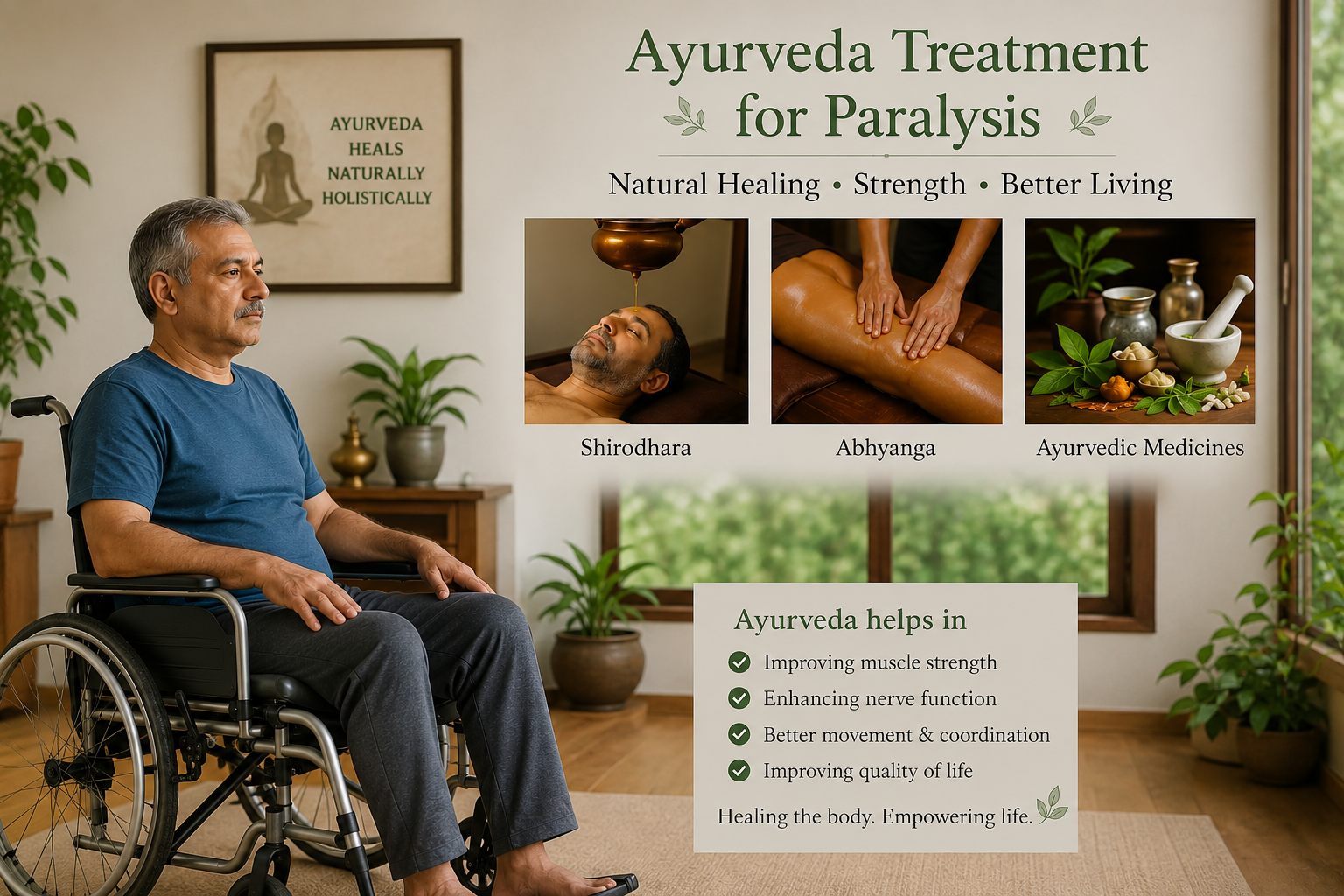
Best Ayurveda Treatment for Paralysis
Understanding the Best Ayurveda Treatment for Paralysis
Paralysis affects movement and muscle control; therefore, many people seek the best ayurveda treatment for paralysis to improve recovery and quality of life. Moreover, Ayurveda describes paralysis as a condition related to aggravated Vata Dosha; therefore, Ayurvedic physicians focus on restoring balance and improving nerve function. Furthermore, Ayurveda combines herbal medicines, Panchakarma therapies, diet, and lifestyle modifications; consequently, it supports holistic healing and rehabilitation.
Causes of Paralysis According to Ayurveda
According to Ayurveda, aggravated Vata Dosha disrupts the normal functioning of nerves and muscles; therefore, weakness and loss of movement may occur. Additionally, stroke, nerve injuries, trauma, infections, and degenerative disorders can trigger paralysis; consequently, affected individuals require comprehensive care. Moreover, improper diet, stress, and unhealthy habits can aggravate Vata; therefore, Ayurvedic management addresses these contributing factors.
Symptoms That May Require the Best Ayurveda Treatment for Paralysis
Paralysis presents with various symptoms; therefore, early diagnosis remains important. Furthermore, patients may experience:
- Weakness in one or more limbs; consequently, mobility becomes difficult.
- Loss of muscle control; therefore, daily activities become challenging.
- Speech difficulties; moreover, communication may become impaired.
- Facial deviation; consequently, facial expressions may change.
- Numbness and tingling sensations; therefore, sensory function may decrease.
- Difficulty in walking or balancing; furthermore, independence may reduce.
Best Ayurveda Treatment for Paralysis: Ayurvedic Approach
Ayurveda adopts a personalized approach; therefore, treatment varies according to the patient’s condition and strength. Moreover, Ayurvedic physicians evaluate Dosha imbalance; consequently, they design individualized treatment plans.
1. Panchakarma Therapies
Panchakarma therapies help balance Vata Dosha; therefore, they play a significant role in paralysis management.
Abhyanga (Medicated Oil Massage)
Abhyanga https://prasadini.com/abhyanga/ improves circulation and nourishes nerves; consequently, muscle stiffness and weakness may reduce. Moreover, medicated oils support tissue rejuvenation; therefore, patients often experience improved mobility.
Pizhichil
Pizhichil https://prasadini.com/kaya-seka-or-pizhichil/ combines oil application and gentle heat; therefore, it relaxes muscles and improves circulation. Furthermore, this therapy promotes strength and flexibility; consequently, recovery may improve.
Shashtika Shali Pinda Sweda
This https://prasadini.com/shastikashali-pinda-sweda/ specialized sudation therapy nourishes muscles and nerves; therefore, it helps restore function. Moreover, it improves muscle tone; consequently, patients may experience better movement.
Basti (Medicated Enema)
Basti https://prasadini.com/basti-karma/ directly addresses aggravated Vata Dosha; therefore, Ayurveda considers it one of the most effective therapies for neurological disorders. Furthermore, Basti supports nerve health; consequently, it enhances overall treatment outcomes.
Nasya
Nasya https://prasadini.com/nasya-karma/ delivers medicated oils through the nasal passages; therefore, it benefits neurological conditions affecting the head and neck. Moreover, it supports brain function; consequently, recovery may improve.
Ayurvedic Medicines for Paralysis
Ayurvedic physicians prescribe medicines according to individual needs; therefore, treatment remains personalized. Moreover, commonly used formulations may include:
- Ashwagandha preparations; therefore, nerve strength may improve.
- Bala-based formulations; consequently, muscle nourishment may increase.
- Brahmi https://prasadini.com/product-category/medicines-with-gold/ preparations; furthermore, cognitive function may improve.
- Rasayana medicines; therefore, tissue regeneration may receive support.
Patients should consult qualified Ayurvedic physicians; consequently, they can receive appropriate guidance and dosage recommendations.
Diet Recommendations During Paralysis Recovery
A nourishing diet supports healing; therefore, Ayurvedic physicians recommend easily digestible foods. Moreover, warm and freshly prepared meals help balance Vata; consequently, digestion and tissue nourishment improve.
Recommended dietary practices include:
- Consuming warm cooked foods; therefore, Vata remains balanced.
- Including healthy fats such as ghee; consequently, nerve nourishment improves.
- Drinking adequate warm water; moreover, hydration supports recovery.
- Avoiding excessively dry and cold foods; therefore, Vata aggravation decreases.
Yoga and Physiotherapy Support
Yoga complements Ayurvedic treatment; therefore, patients may achieve better functional recovery. Moreover, gentle exercises improve flexibility and coordination; consequently, mobility increases gradually. Furthermore, physiotherapy strengthens affected muscles; therefore, rehabilitation becomes more effective.
Benefits of the Best Ayurveda Treatment for Paralysis
Ayurvedic management offers several potential benefits; therefore, many patients choose an integrative approach.
- Improved circulation; consequently, tissue nourishment increases.
- Enhanced muscle strength; therefore, mobility may improve.
- Better nerve function; moreover, recovery may accelerate.
- Reduced stiffness; consequently, daily activities become easier.
- Improved quality of life; therefore, patients regain confidence.
Conclusion
The best ayurveda treatment for paralysis focuses on restoring balance, improving nerve function, and enhancing overall well-being. Moreover, Ayurvedic therapies, herbal medicines, dietary guidance, and rehabilitation techniques work together; consequently, they support recovery and functional improvement. Therefore, early consultation with an experienced Ayurvedic physician can help patients receive appropriate and individualized care. Also see video testimonial of recovered patient in my channel using the link below https://youtu.be/wbh5blbgAhA?si=G4zsGy9dzqRs6TJ5