Gout
06.
Gout
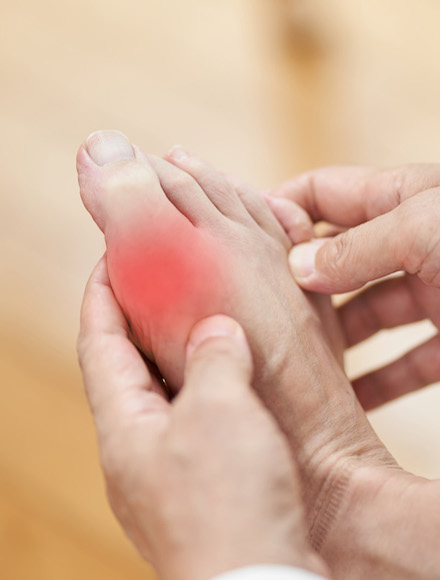
An inflammatory response to the development of monosodium urate crystals brought on by hyperuricaemia is known as gout. The prevalence of gout has increased recently. The goal of the current medical standard is to alleviate symptoms. In Ayurveda, gouty arthritis is compared to Vata-pitta adhika vatarakta because of its similar aetiology and clinical signs, and treatment is designed appropriately. Gout being a type of arthritic disease shows pain and swelling in the joints. Gout happens when there is buildup of uric acid in the body and its accumulation at the joints. It mainly affects the big toe of the foot . The symptoms mainly include pain and swelling at the joints which come and go in episodes. Gout can affect anyone. Men are three times more likely to develop gout. Women tend to experience gout after menopause.
Cause of Gout
Gout is mostly caused by hyperuricemia. A poor diet, a genetic predisposition, a deficiency in urate, uric acid salts, or excretion are some of the causes of this. To put it another way, under normal conditions, uric acid dissolves in the blood, passes through the kidneys, and eventually ends up in urine. Risk factors for gout include high blood pressure, impaired kidney function, and consuming too much purine-rich meat and seafood. Gout can be brought on by some drugs, including diuretics. These also include recent surgery, overeating, joint injury fever and dehydration.
Symptoms of Gout:
The signs and symptoms of gout almost always occur suddenly, and often at night.Although it can happen in any joint, gout typically affects the big toe. The ankles, knees, elbows, wrists, and fingers are among the other joints that are frequently impacted. Within the first four to twelve hours after it starts, the pain is probably at its worst.
Some joint stiffness may persist for a few days to a few weeks after the worst of the pain has passed. Subsequent assaults are likely to impact more joints and continue longer.
Swelling, tenderness, warmth, and redness develop in the afflicted joint or joints. You might not be able to move your joints normally when your gout worsens.
Gout in Ayurveda and it's Treatments :
The Ayurvedic approach is based on the principle of prevention and cure. Vatarakta is basically due to the predominance of vitiation of Vata pitta dosha and rakta dhatu. Excessive consumption of salty, sour, pungent, alkaline food; eating dried and spoiled meat; intake of horsegram, blackgram, raddish , sour curd, buttermilk in excess and improper manner are some of the causes for vatarakta.
Ayurveda treatment includes panchakarma therapies along with internal medications , correction towards healthy food habits and lifestyle which forms a way to successful recovery of this disease. Snehapana, abhyanga, swedana, virechana and Basti methods are quite effective. Raktamokshana ( blood letting therapy) is very beneficial in providing relief in severe cases.
Ayurveda, the science of life, has been effective in curing and providing long lasting relief in the cases of gout since ages, thereby enhancing life and mankind.

Authentic Ayurvedic therapies that detoxify, rejuvenate, and restore balance naturally.
Specialized programs like Swarna Prashanan, Abhyanga, and Panchakarma for holistic healing.